Blog /
Week 3 review: SPY fell 2%, and the campaigns made $180
SPY fell 2% in the week and Fear & Greed dropped into extreme fear, but the three example campaigns gained $179.80, to $1,138.38. The IWM put is $133 under water and the rules hold it. Friday brings two rolls, UPRO's weekly call and JNJ's short call at 21 days, which will most likely cost a debit and move the long call too.
By Team Iron Wheel
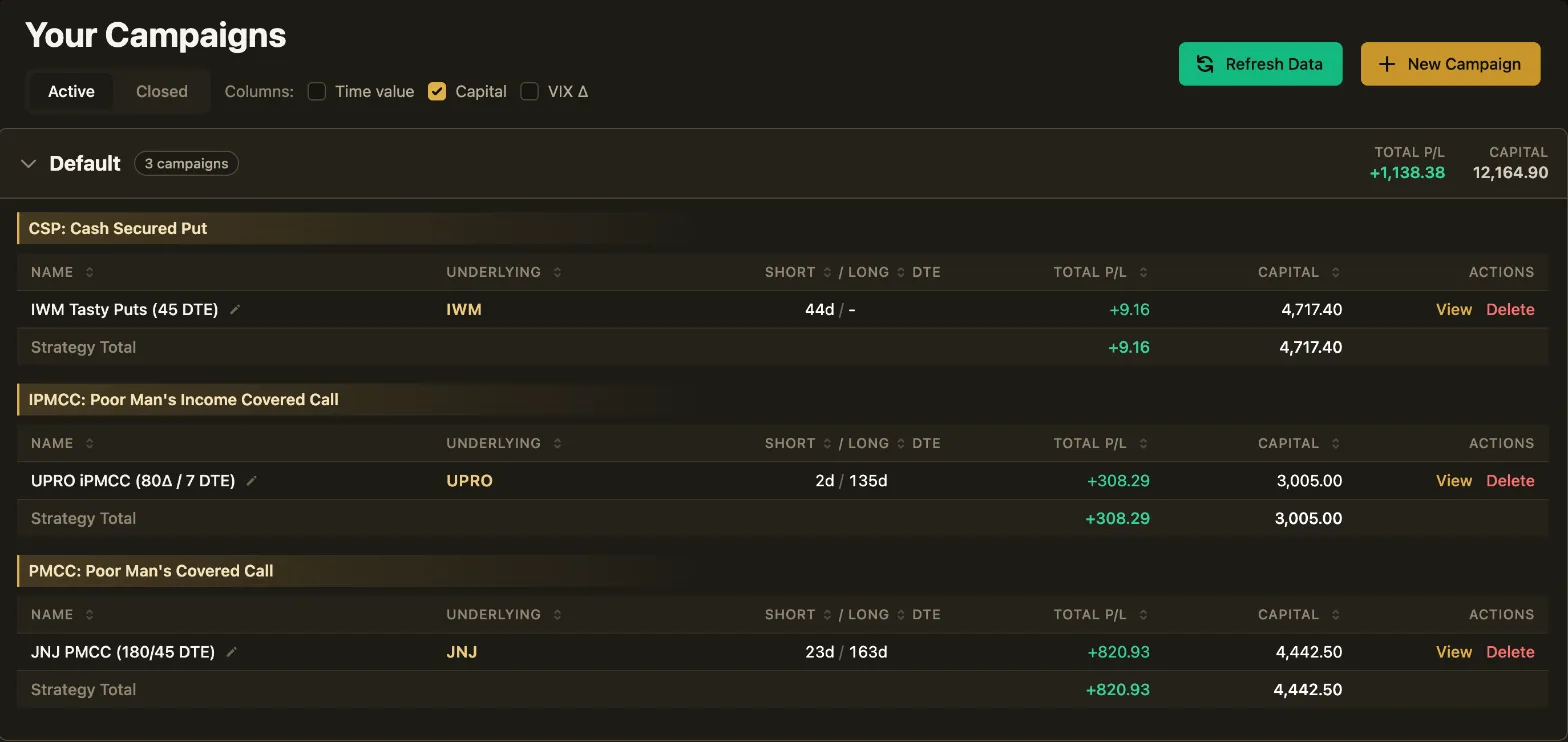
The three example campaigns gained $179.80 in a week when SPY fell 2%. Friday, November 6, is a roll day for two of them. UPRO's weekly call rolls, and JNJ's short call reaches 21 days. The JNJ roll will most likely cost a debit, and under the rules that moves the long call too. The IWM put is $133 under water, and the rules hold it. The figures are from The Iron Wheel before Wednesday's open, November 4, at Tuesday's closing prices. It is an example for education, not a recommendation.
| Campaign | P/L | Nearest rule trigger | Action |
|---|---|---|---|
| IWM puts | +$9.16 | 21 days to expiration on November 27 | Hold |
| JNJ PMCC | +$820.93 | 21 days to expiration on November 6 | Roll on Friday |
| UPRO iPMCC | +$308.29 | Weekly expiration on November 6 | Roll on Friday |
The market: extreme fear
SPY fell 2.0% from one review to the next. Most of it came on a red Friday, October 30, when SPY dropped 1.8%.
VIX closed Tuesday at 20.83, up from 17.52 a week earlier. On Friday it touched 23.93. CNN's Fear & Greed index for stocks fell from 34 to 24, in extreme fear.
IWM puts: sold near the top
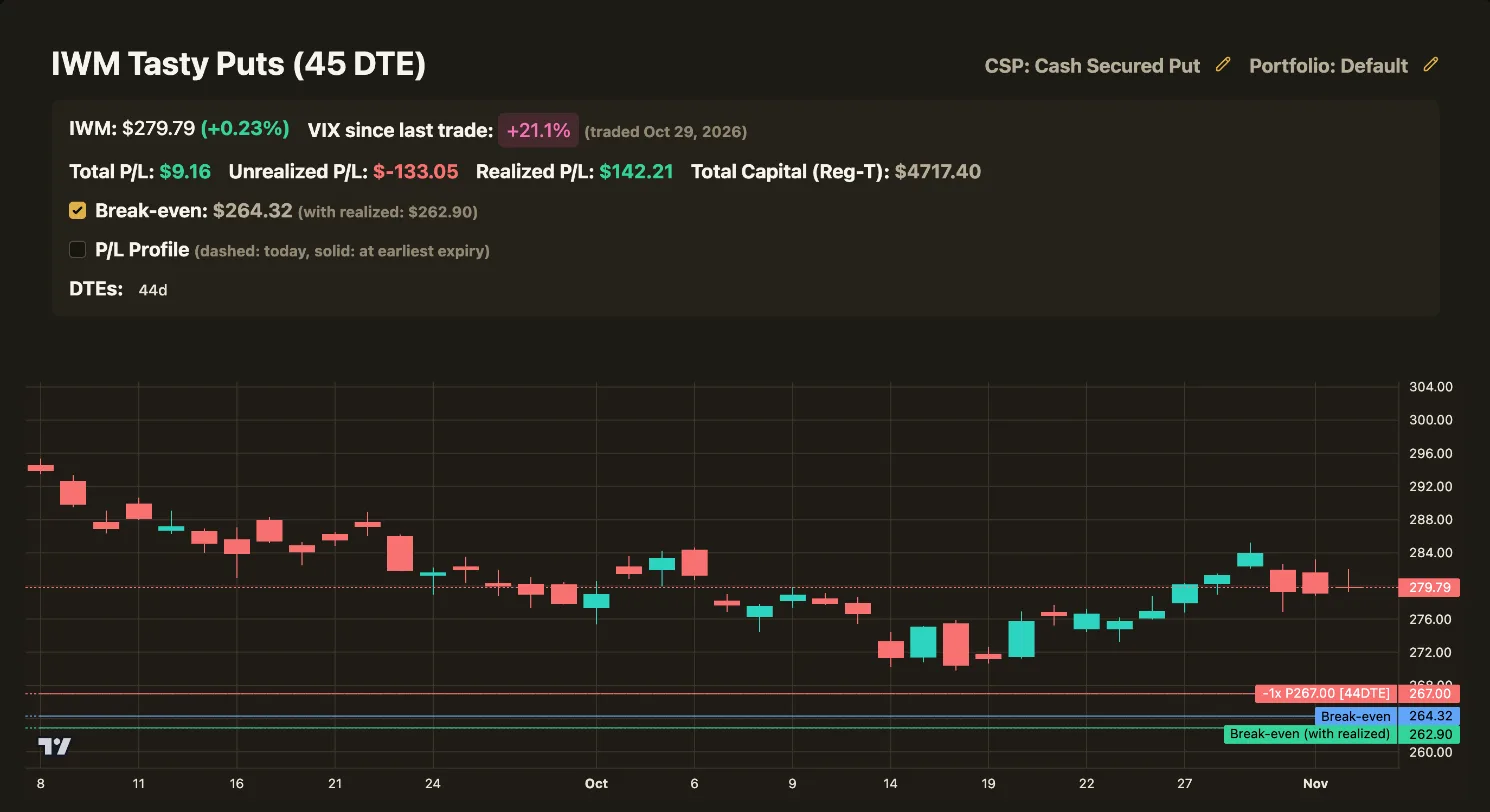
The new put went on near the top of IWM's bounce, with IWM at about $284 on October 29. IWM slid from there and closed Tuesday at $279.79, down 1.5%.
Five days after a $142 gain, the next put is under water. It's at $4.01, up from the $2.69 it sold for. Its delta rose from 0.20 to 0.26. The position now moves like 26 shares of IWM.
Why the put got dearer
IWM slid 1.5%, and the put's price rose by half. By a Black-Scholes estimate, the $1.32 splits three ways.
- IWM's slide added about $1.
- Implied volatility added about 70 cents. IWM's rose from about 22% to 24%.
- Five days of time decay took back about 35 cents.
The rules hold
An open loss straight after a win invites a quick exit. The rules have no stop-loss. They buy the put back once it trades below about $1.35, half its credit. Otherwise the 21-day exit comes on November 27.
Neither is close, and IWM is still 4.6% above the strike. The put stays open.
JNJ: a round trip
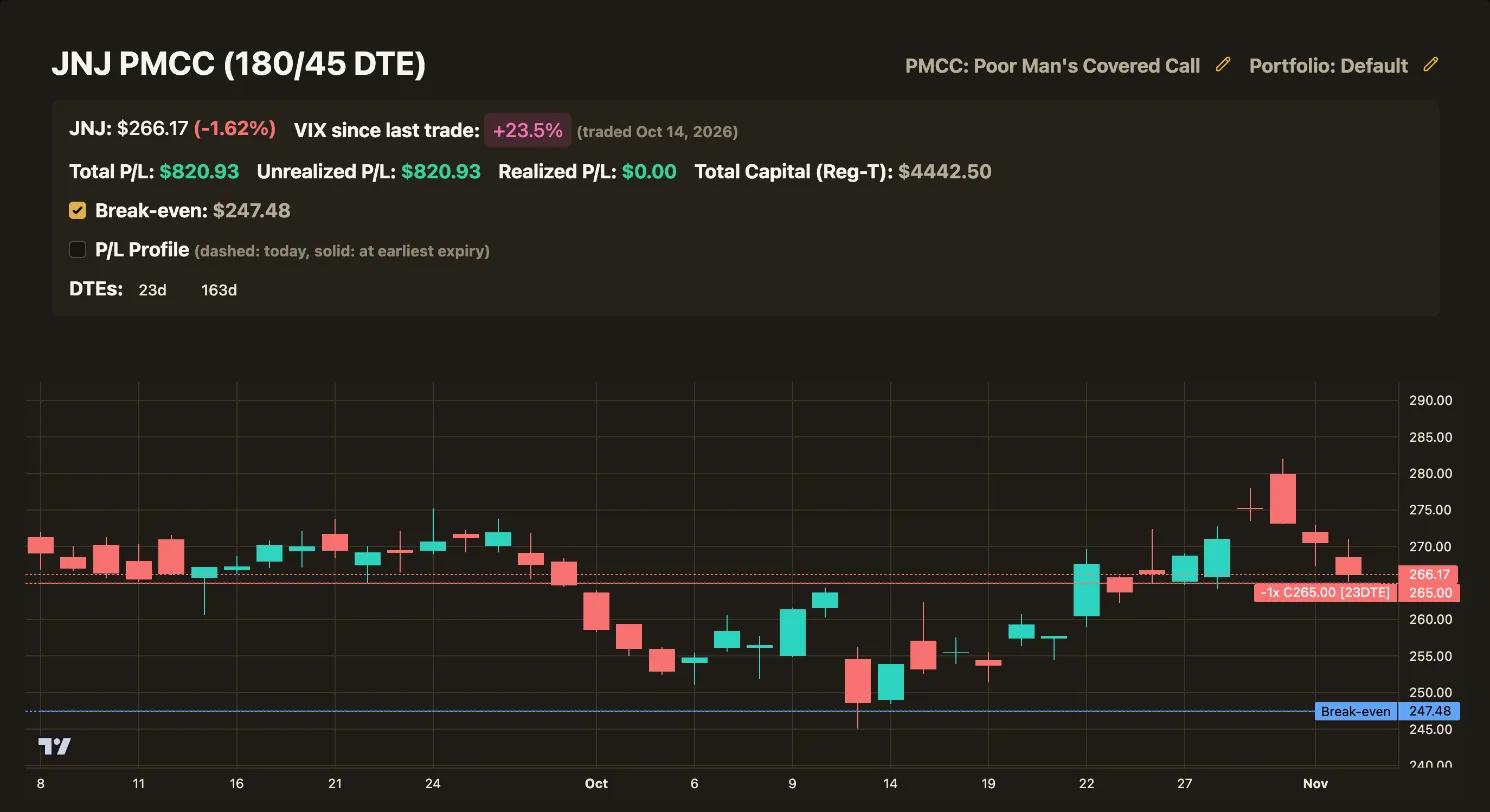
JNJ ran to $282.02 on Friday, October 30, then gave it all back. It closed Tuesday at $266.17, just above the short call's 265 strike.
The pair barely noticed. The long call gave back $230 over the week, and the short call made $232.50. Together they move like 30 shares of JNJ.
The long call's own triggers are a long way off. It has 163 days left, and the rules roll it under 90. Its delta is 0.85, against a floor of 0.70.
Friday: 21 days
On Friday, November 6, the short call reaches 21 days to expiration. The rules roll it out to the December 18 expiration, at about 25 delta.
The catch: a debit
The short call is in the money, and most of its $7.68 is time value. Buying it back costs more than a 25-delta call six weeks out brings in. A Black-Scholes estimate at Tuesday's close prices the roll like this.
- Buy 1 JNJ Nov 27 2026 265 call: about $7.20
- Sell 1 JNJ Dec 18 2026 285 call: about $3.05
Net debit: about $4.15 a share, or $415.
Under the rules, a short call rolled for a debit takes the long call with it. The long call rolls up too, and the pair is reset around JNJ's price.
Friday's prices decide it. Below about $255, the same roll would bring in a credit, and the long call would stay.
UPRO: the weekly roll comes round

UPRO has barely moved since the roll. It closed Tuesday at $140.41, 80 cents below Friday's close. The new pair is up $112.72, on top of the $195.57 the roll banked.
The short call is $6.41 in the money. About $1.64 of its price is time value. That's well above the $0.05 that would bring the roll forward, so the call rolls on Friday.
The long call sits at 0.81 delta, inside its 77–82 band. No re-centre.
The plan
- Friday, November 6: UPRO. The 134 call rolls to next week's 70-delta call in the session's last 30 minutes, or sooner if its time value drops below $0.05.
- Friday, November 6: JNJ. The short call rolls out to December 18 at about 25 delta. If that costs a debit, the long call rolls up with it.
- IWM. The put stays open. Once it trades below about $1.35, the buy-back goes in during a session's last 30 minutes. Otherwise it reaches 21 days on Friday, November 27.
The next review follows in a week.